Rodent exclusion service prevents invasive house mice (Mus musculus) and Norway rats (Rattus norvegicus) from entering living areas, crawlspaces, and attics. Unlike basic rodent control that relies on recurring poison…
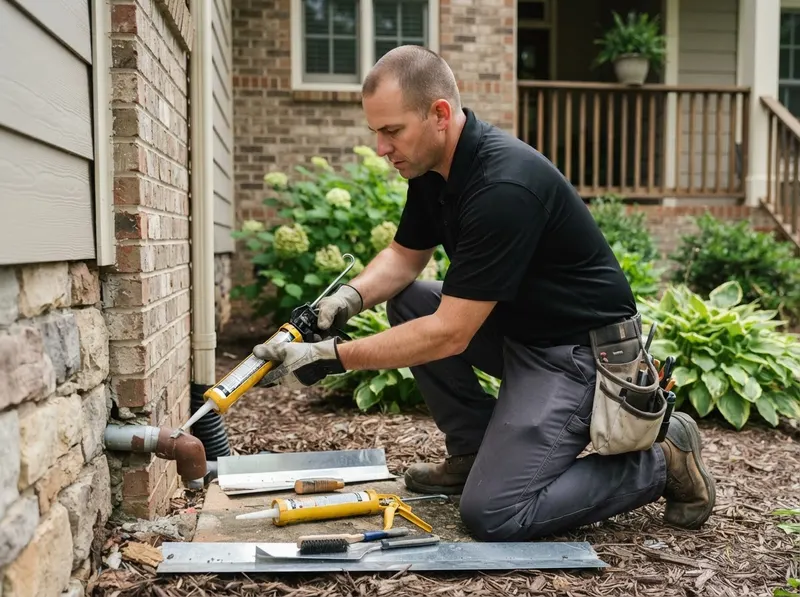
Rodent exclusion service prevents invasive house mice (Mus musculus) and Norway rats (Rattus norvegicus) from entering living areas, crawlspaces, and attics. Unlike basic rodent control that relies on recurring poison baits, exclusion focuses entirely on permanent physical barrier installation. In heavily wooded Cary neighborhoods like Preston, Lochmere, and MacGregor Downs, mature loblolly pines and hardwood canopies frequently deposit rodents directly onto roof junctions and soffit returns. Standard retail foam sealant fails because rodents gnaw through polyurethane within 48 hours. Professional exclusion replaces compromised plastic covers with quarter-inch 24-gauge galvanized hardware cloth, metal flashing, and weather-resistant backing that rodents cannot penetrate.
The service prioritizes household safety by eliminating the need to disperse anticoagulants in kitchens, pantries, or bedrooms. In master-planned developments such as Amberly, Carpenter Village, and Highcroft, modern construction leaves distinct vulnerability points where air-conditioning lines, gas conduits, and tankless water-heater vents pass through exterior siding. Mice require only a six-millimeter opening, the diameter of a standard pencil, to squeeze into wall voids. Structural exclusion seals these utility entryways with metal escutcheon plates and heavy copper mesh, followed by an exterior-grade waterproof sealant.
Choosing full perimeter exclusion over spot trapping requires evaluating structural longevity versus immediate knockdown. Snap traps placed in attics manage an existing indoor group but leave the access route open for nearby woodland populations around Fred G. Bond Metro Park and Hemlock Bluffs Nature Preserve. A comprehensive exclusion seals the entire structure from the foundation footing to the ridge caps. The trade-off involves a higher upfront mechanical expense compared to a temporary retail trap run, balanced by ending continuous chemical dependency and preventing dead-animal odor inside finished drywall partitions.
Work proceeds through a standardized three-step protocol. First, an inspector checks the lower foundation, crawlspace access doors, and roof fascia boards to map every gnaw mark, grease rub, and structural gap. Second, technicians bolt galvanized steel barriers over foundation louvers, tuck copper mesh around plumbing stacks, and reinforce garage-door corner gaskets. Third, interior non-chemical monitoring stations confirm that no residual animals remain trapped inside before concluding the initial barrier work.
Every job gets a firm, written price after a free on-site visit.
Tell us about your rodent exclusion service job in Cary and we'll send a clear, written quote, usually the same day.
 Copper Bell Pest Control