Cary neighborhoods featuring mature tree canopies and mixed hardwood buffers, such as Lochmere, MacGregor Downs, and Preston, create microclimates that sustain high humidity in leaf litter. These conditions allow the…
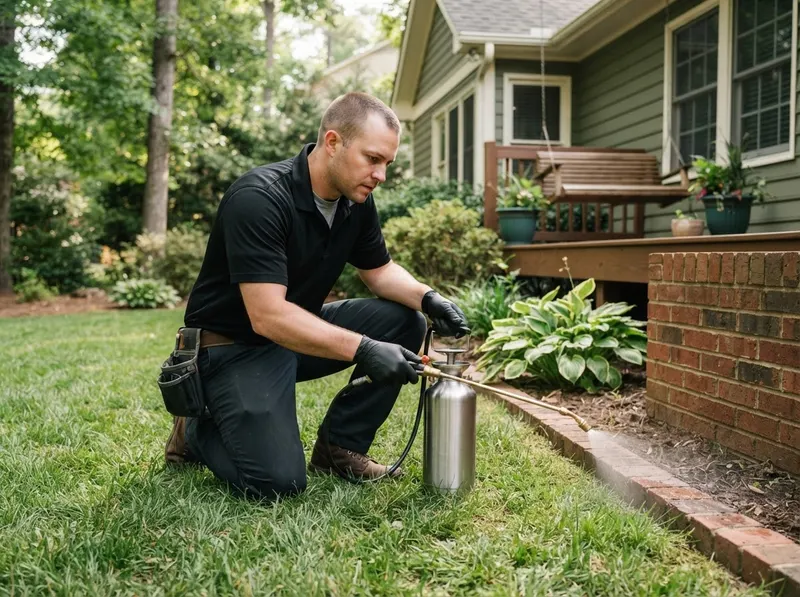
Cary neighborhoods featuring mature tree canopies and mixed hardwood buffers, such as Lochmere, MacGregor Downs, and Preston, create microclimates that sustain high humidity in leaf litter. These conditions allow the blacklegged tick (Ixodes scapularis) and the lone star tick (Amblyomma americanum) to complete their two-year lifecycles adjacent to backyard play areas. In western Cary communities like Amberly, Twin Lakes, Carpenter Village, and Highcroft, newer sod transitions directly into retention ponds and natural woodland boundaries. Wildlife corridors bring white-tailed deer and small rodents directly to suburban fence lines, introducing tick nymphs and host-seeking fleas into manicured turf.
A single female flea lays up to 50 eggs per day, which fall from domestic pets into carpet fibers, subflooring cracks, and baseboard junctures. Standard retail aerosol foggers release pesticide upward into open air space, leaving 90% of the flea biomass, comprising unhatched eggs, pupae in protected silk cocoons, and organic-debris-feeding larvae, completely shielded near floor level. Professional treatment integrates an adulticide to stop biting insects immediately, paired with a target-specific Insect Growth Regulator (IGR) like pyriproxyfen. The IGR prevents juvenile fleas from completing metamorphosis into reproductive adults, ending the 21-day reproductive cycle without coating living areas in heavy chemical residues.
Outdoor defense requires distinct strategies based on lot boundaries. If a property spans a quarter-acre lot with direct sunlight, a single-barrier yard application typically resolves activity. If a parcel features dense groundcover, wooded property margins, or shaded mulched beds common in Wellsley, technicians apply microencapsulated suspensions extending 20 to 30 feet into tree lines. These microencapsulated formulations adhere to moisture-laden pine straw and foliage, resisting rainfall breakdown for 30 to 60 days. Interior applications require family members and pets to vacate the treated structure for 2 to 4 hours until liquid deposits dry completely, providing low-stress, scientifically calibrated safety for household bedrooms and food preparation areas.
Every job gets a firm, written price after a free on-site visit.
Tell us about your flea and tick elimination service job in Cary and we'll send a clear, written quote, usually the same day.
 Copper Bell Pest Control